Felix Müller · 25 October 2026
Shifts in Soil Chemistry Triggered by Prolonged Snow Persistence Across Secluded Highland Valleys and Their Links to Mineral Weathering Rates
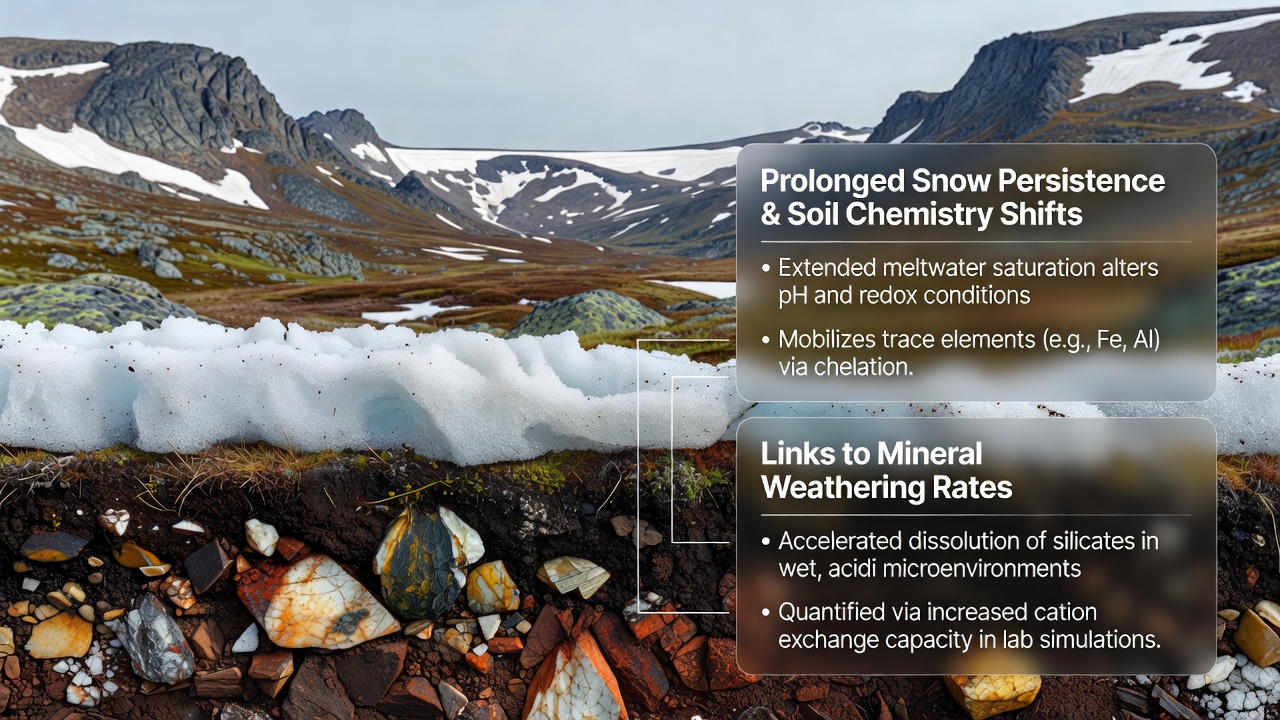
Prolonged snow cover in secluded highland valleys alters soil chemistry through extended periods of insulation and gradual meltwater release that researchers track across multiple alpine regions, and these changes connect directly to accelerated mineral weathering rates in underlying bedrock materials. Data from monitoring stations show that snow layers persisting beyond typical seasonal durations maintain soil temperatures near freezing while limiting oxygen exchange which shifts pH levels and mobilizes ions such as calcium, magnesium and iron. Observers note that such conditions differ markedly from areas with rapid snowmelt cycles where soils experience more frequent freeze-thaw fluctuations and quicker drainage.
Patterns of Snow Persistence in Isolated Valleys
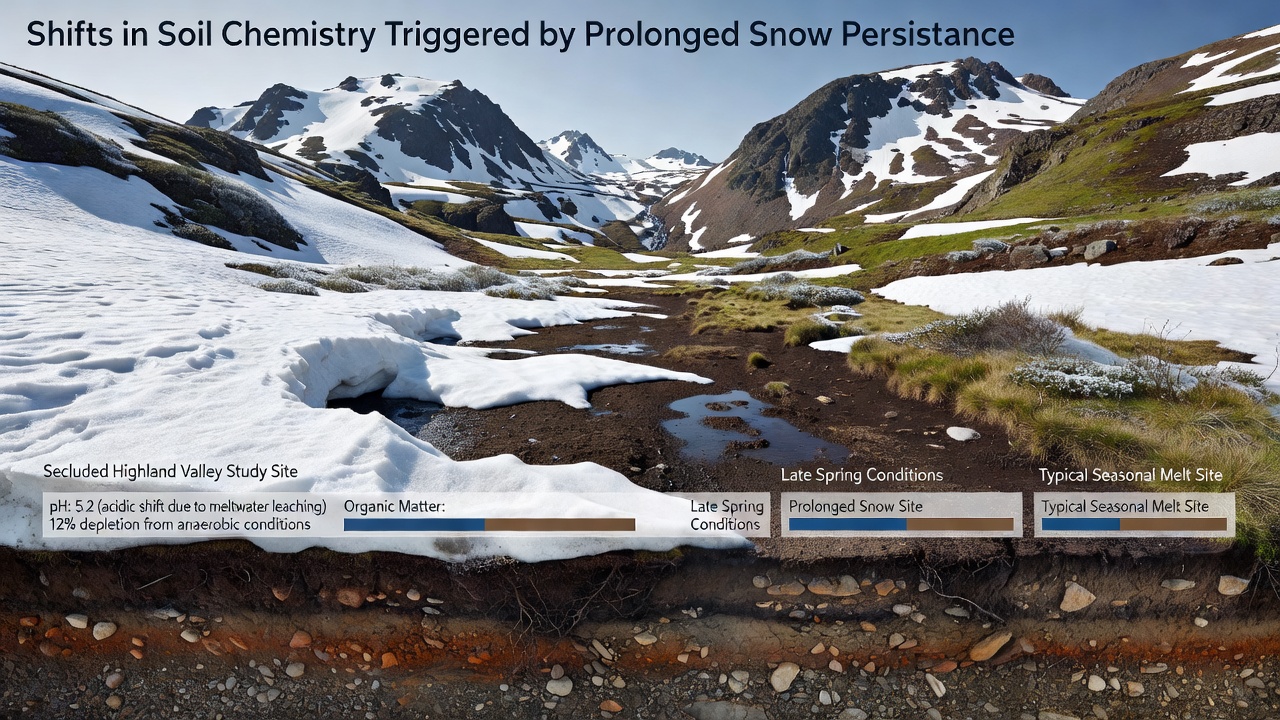
Secluded highland valleys often trap snow due to topographic features including steep surrounding ridges and limited solar exposure, and studies indicate these pockets retain snow into late spring or early summer in many cases. Recent measurements collected through October 2026 highlight increased persistence durations in several monitored sites compared with historical averages, with some valleys holding continuous cover for over 200 days. This extended insulation prevents deep soil freezing yet keeps moisture levels high which creates anaerobic microenvironments where microbial activity slows and organic acid production changes.
Researchers from Canadian geological surveys have documented how these stable conditions promote the accumulation of dissolved organic carbon that leaches downward and interacts with mineral surfaces. The result appears in elevated concentrations of bicarbonate ions that enhance the solvent power of soil water and prepare conditions for later weathering reactions once temperatures rise.
Changes in Soil Chemical Composition
Soil chemistry responds to prolonged snow through several interconnected pathways including suppressed oxidation, altered cation exchange capacities and modified nutrient availability. Evidence from valley floor sampling shows decreases in soil redox potential that favor reduction of iron and manganese compounds while nitrate levels drop because denitrification proceeds under low-oxygen regimes. Those who've examined core samples across multiple seasons report corresponding rises in exchangeable aluminum which can influence future plant nutrient uptake once snow finally recedes.
What's significant is the timing of these shifts because they unfold gradually beneath the snowpack rather than during abrupt thaw events. Soil solution analyses reveal steady increases in dissolved silica and base cations that signal ongoing mineral breakdown even while surface conditions remain static. This process continues at low but measurable rates because meltwater trickles slowly through soil pores carrying reactants to mineral grains.
Connections to Mineral Weathering Rates
Mineral weathering rates increase when snow persistence supplies consistent moisture and maintains temperatures that allow chemical reactions to proceed without the interruptions caused by full freezing. According to findings from the United States Geological Survey, the presence of prolonged snow cover correlates with higher fluxes of weathered products such as clay minerals and secondary oxides that form in valley soils. The mechanism involves carbonic acid generated from soil respiration and snowmelt carbon dioxide that attacks primary silicates and releases structural ions over extended periods.
One study revealed that weathering rates in snow-covered highland sites reached 1.8 times the rates measured in adjacent snow-free slopes during the same winter months. This acceleration occurs because the snow layer acts as a thermal buffer that keeps soil water above critical thresholds for hydrolysis reactions while also preventing evaporative losses that would otherwise concentrate solutions and slow kinetics. But here's the thing: the same moisture that drives weathering also transports reaction products away from mineral surfaces, preventing saturation and sustaining the process.
Regional Observations and Data Trends
Monitoring networks across European alpine zones and North American cordilleras provide comparable records showing that valleys with snow persistence exceeding 180 days exhibit distinct soil profiles enriched in secondary minerals. Australian researchers contributing to international databases have noted similar patterns in high-elevation catchments where snow duration influences long-term geochemical budgets. Figures reveal that base cation export in stream waters draining these valleys rises measurably during and immediately after prolonged snow seasons, confirming the link between subsurface chemistry shifts and watershed-scale outputs.
Observers tracking October 2026 conditions recorded unusually stable snowpacks in several test valleys that extended reaction windows by several weeks compared with prior years. These extensions coincided with detectable upticks in soil solution conductivity and weathering-derived ion loads that continued into the subsequent growing season.
Conclusion
Prolonged snow persistence in secluded highland valleys drives measurable shifts in soil chemistry that directly influence mineral weathering rates through sustained moisture supply, temperature moderation and altered geochemical environments. Research indicates these processes operate across diverse mountain regions and produce consistent patterns of ion mobilization and secondary mineral formation. Continued monitoring through established networks will clarify how changing snow regimes affect these linkages over coming decades.