Bianca Lang · 11 October 2026
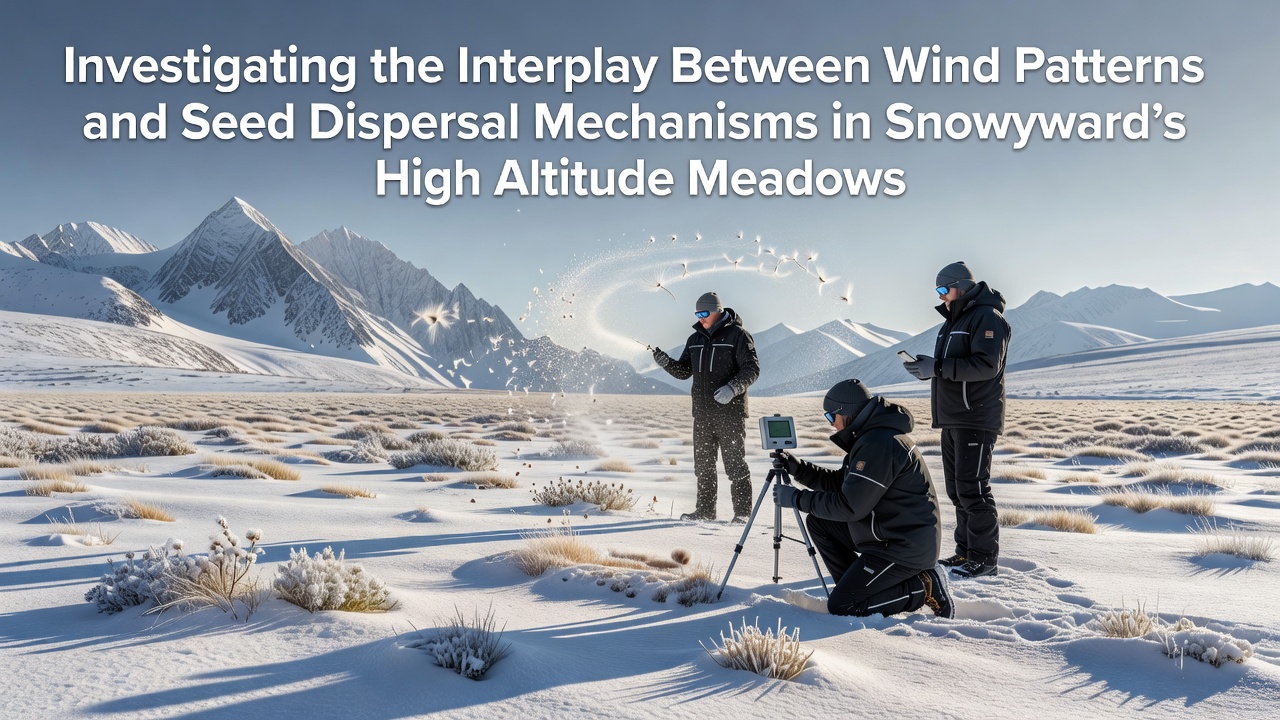
Investigating the Interplay Between Wind Patterns and Seed Dispersal Mechanisms in Snowyward's High Altitude Meadows
High altitude meadows in Snowyward feature unique ecological dynamics where wind patterns directly shape how seeds travel and establish new growth across rugged terrain, and researchers continue to map these interactions through field observations and modeling techniques. The region's elevation creates consistent air movement that carries lightweight seeds over distances ranging from several meters to kilometers, while heavier seeds often remain closer to parent plants because gusts lack the force needed to lift them consistently.
Regional Wind Characteristics
Wind in Snowyward's meadows typically peaks during transitional seasons, and data from monitoring stations show average speeds between 15 and 35 kilometers per hour at 2,500 meters elevation, with stronger downdrafts occurring along valley slopes that funnel air toward lower meadows. These patterns vary by time of day because solar heating of exposed rock faces generates upslope flows in the afternoon, whereas nighttime cooling produces downslope drainage that redistributes seeds toward sheltered depressions. Observers note that October 2026 brought unusually sustained westerly flows across the range, allowing teams to record seed trajectories over extended periods and compare them against historical averages collected since 2018.
Seed Types and Dispersal Traits
Plant species in these meadows produce seeds with distinct adaptations that respond differently to the same wind conditions, and species such as alpine aster develop pappus structures that increase surface area for lift while grasses like fescue rely on lightweight husks that tumble along the ground when gusts exceed 20 kilometers per hour. Studies from the University of Colorado's alpine research program indicate that approximately 60 percent of recorded dispersal events involve seeds traveling less than 50 meters, yet a smaller fraction reaches distances beyond 200 meters when wind aligns with open corridors between rock outcrops. United States Geological Survey reports document similar ratios in comparable North American sites, confirming that topography modulates how far individual seeds move under identical wind speeds.
Interactions Between Airflow and Terrain
Terrain features such as ridges and boulder fields create turbulence zones where seeds can be lifted higher before settling, and this process allows certain species to colonize isolated patches that would otherwise remain inaccessible. Researchers tracking marked seeds have found that seeds released from windward slopes often land on leeward sides within hours, whereas seeds originating in protected bowls tend to stay localized unless a frontal system passes through and generates stronger updrafts. Those who've studied this know that microsite conditions like soil moisture and snow cover duration further determine whether dispersed seeds germinate successfully, because seeds that land in shaded pockets retain viability longer than those exposed to rapid freeze-thaw cycles.
Data Collection Methods
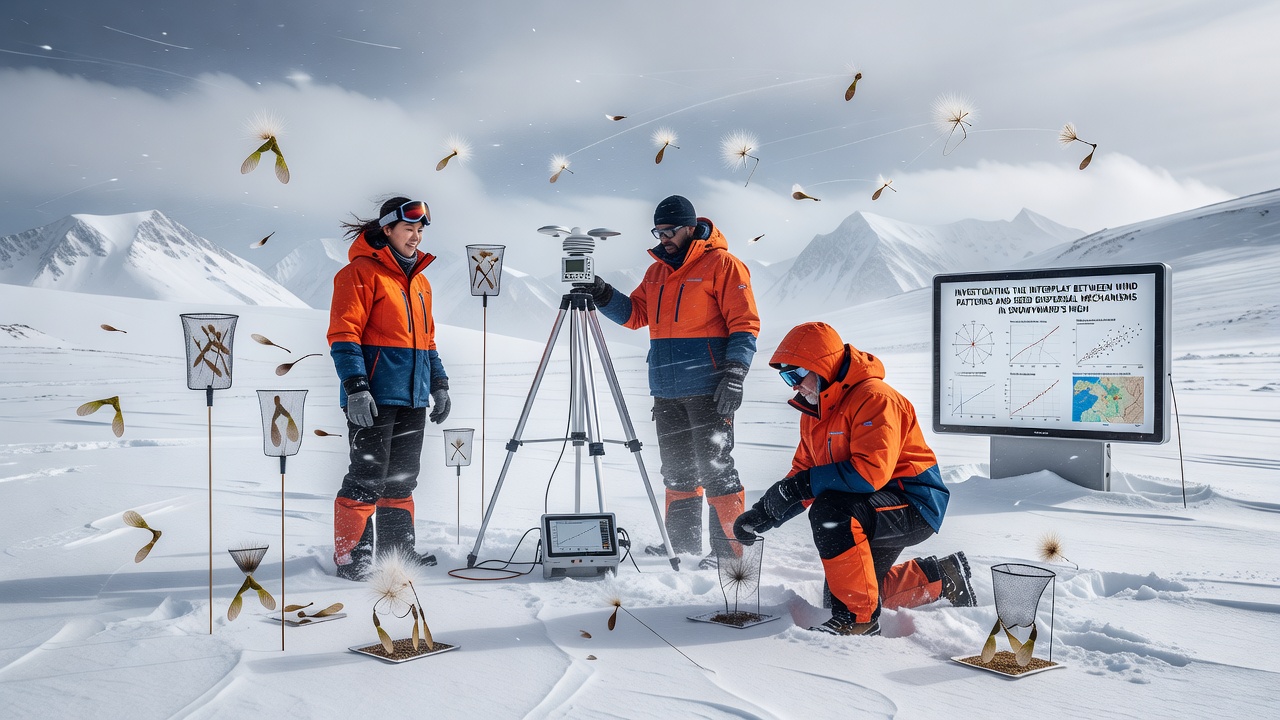
Teams deploy anemometers at multiple heights alongside seed traps that capture material at ground level, and they combine these readings with drone imagery to map vegetation patches and wind corridors across several square kilometers. In October 2026, additional sensors recorded vertical wind profiles during storm events, revealing that downdrafts can deposit seeds in clusters that later form dense stands once spring arrives. Canadian researchers from the University of Alberta have contributed parallel datasets from similar latitudes, showing that the interplay between wind and seed morphology produces predictable distribution patterns when elevation and aspect remain constant.
Long-Term Ecological Implications
Over multiple seasons, wind-mediated dispersal influences species composition because plants with better-adapted seeds gradually occupy more area while others persist only in refugia where wind exposure stays low. Figures reveal that meadows experiencing consistent cross-slope winds maintain higher diversity indices than those dominated by unidirectional flows, and this pattern holds across Snowyward's documented sites. Continued monitoring allows models to forecast how shifts in wind regimes might alter future vegetation maps, particularly if average wind speeds increase as regional climate records suggest.
Conclusion
Investigations into wind and seed dispersal in Snowyward's high altitude meadows demonstrate measurable connections between airflow dynamics, seed traits, and landscape features, and ongoing data collection supports refined predictions about vegetation change. Researchers integrate field measurements with regional wind records to trace how dispersal events unfold, and these efforts continue to clarify the mechanisms that sustain meadow ecosystems at elevation.