Bianca Lang · 13 September 2026
How Alpine Flora Adapts to Harsh Winter Conditions in Isolated Mountain Zones
Isolated mountain zones present alpine flora with prolonged freezing temperatures, intense ultraviolet radiation, strong winds, and abbreviated growing seasons that often last only a few weeks each year. Plants in these environments survive through coordinated physical structures, biochemical mechanisms, and life cycle timing that allow them to endure months of snow cover and subzero conditions while resuming growth rapidly once temperatures rise.
Structural Features That Reduce Exposure and Conserve Heat
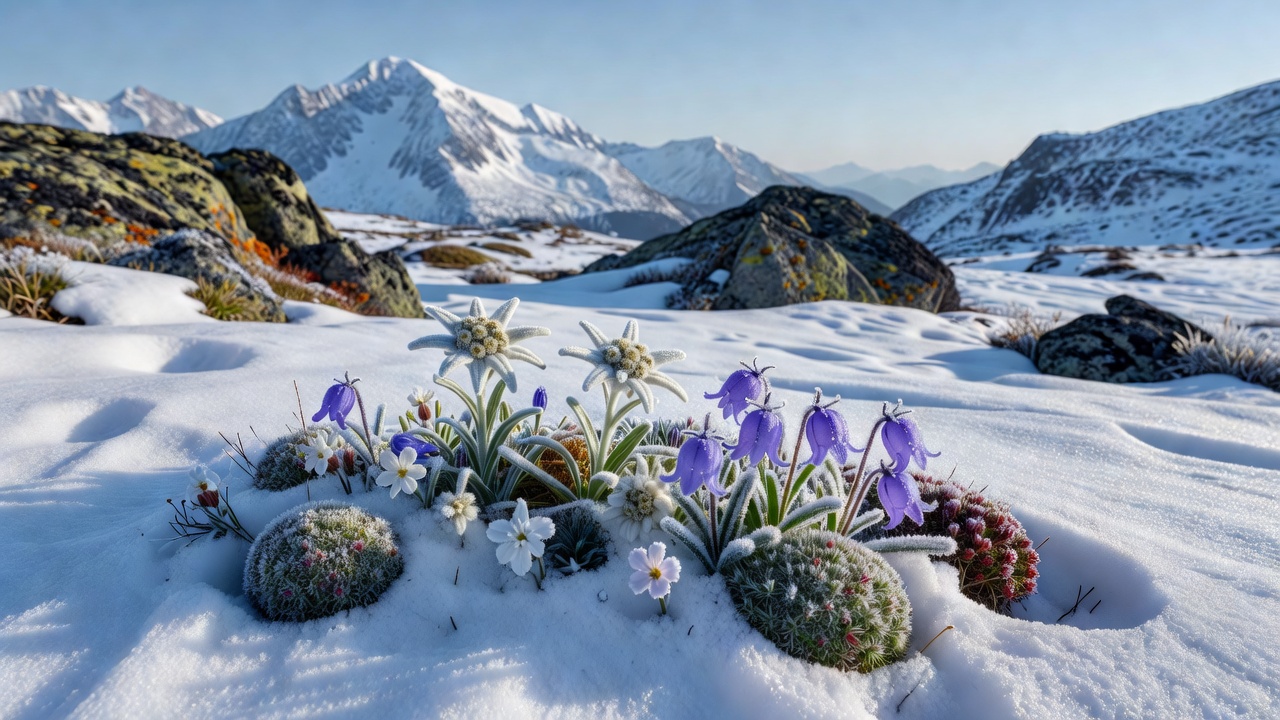
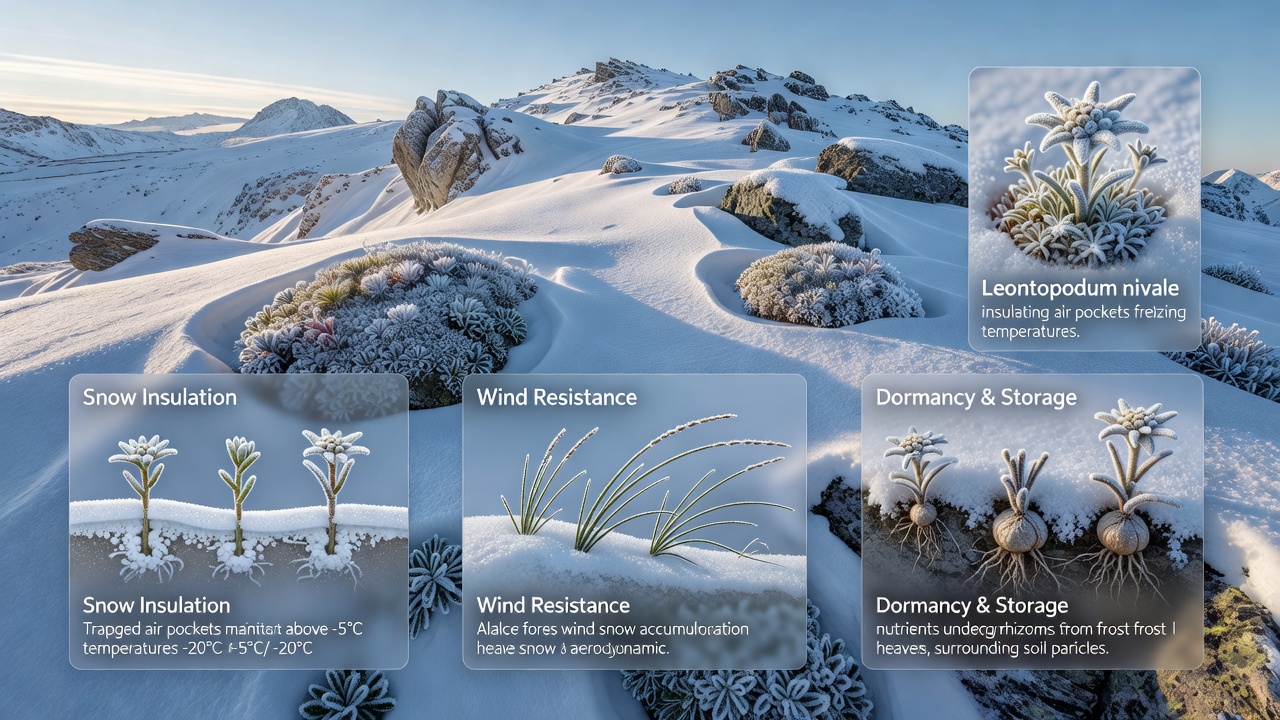
Many alpine species grow in compact cushion or mat forms that minimize surface area exposed to wind while trapping a layer of still air close to the plant body. This growth habit raises internal temperatures several degrees above ambient air during daylight hours and protects delicate tissues from abrasive ice crystals carried by storms. Leaves frequently appear small, thick, and covered with dense hairs or waxy cuticles that reduce water loss and reflect excess radiation. Root systems often extend laterally rather than deeply because permafrost and shallow soils limit vertical penetration; these networks anchor plants against gales and absorb moisture from snowmelt before it drains away. In September 2026 monitoring data from multiple high-elevation sites showed that cushion-forming species retained significantly higher soil temperatures beneath their canopies compared with surrounding bare ground throughout early winter onset.
Biochemical Adjustments That Prevent Cellular Damage
Alpine plants accumulate specialized sugars, proteins, and lipids that function as cryoprotectants, lowering the freezing point of cell sap and stabilizing membranes during ice formation. Some species produce antifreeze proteins that inhibit ice crystal growth inside tissues, while others dehydrate cells intentionally to move water outside where it can freeze harmlessly in intercellular spaces. Chloroplasts in evergreen leaves maintain partial photosynthetic capacity under snow, enabling quick reactivation when light penetrates melting layers. These physiological changes occur in response to shortening day length and falling temperatures rather than actual frost events, giving plants a preparatory window before full winter arrives. Research from the US Geological Survey has documented seasonal shifts in carbohydrate concentrations in species such as alpine avens and mountain sorrel across the Rocky Mountains.
Life Cycle Timing and Reproductive Strategies
Flowering and seed production concentrate into the brief summer window, often completed within four to six weeks after snowmelt. Many species rely on preformed flower buds that develop during the previous season and expand rapidly once protective snow cover retreats. Seed dispersal mechanisms include lightweight structures suited to wind transport across open ridges and delayed germination that waits for stable moisture and temperature cues the following spring. Vegetative reproduction through rhizomes or stolons allows colonies to expand without depending on successful seed set every year. Observations in the European Alps indicate that certain sedges and willows maintain viable buds under snow for up to nine months, emerging green and photosynthetically active within days of exposure.
Interactions With Snow Cover and Microtopography
Snow acts as both insulator and hazard; deep drifts protect plants from extreme cold and desiccation yet can shorten the growing season if they persist too long. Species distribution often follows microtopographic patterns where wind-scoured ridges support dwarf shrubs while depressions accumulate snow and favor graminoids. Meltwater from surrounding slopes supplies critical moisture during early summer, and plants positioned to receive this runoff show higher survival rates. Changes in snow duration recorded through September 2026 at long-term ecological stations have begun to shift the elevational boundaries of some communities, with lower-snow years favoring species that tolerate earlier exposure.
Community-Level Patterns and Future Monitoring
Alpine plant communities function as mosaics where different adaptations allow co-occurrence on the same slope. Cushion plants create microhabitats that shelter less hardy species, increasing overall diversity. Long-term plots maintained by research networks across North America and Europe track these dynamics, providing baseline measurements against which shifts in snow regimes can be compared. Continued collection of physiological and demographic data will clarify how existing strategies interact with changing winter conditions in isolated mountain zones.
Conclusion
Alpine flora persists in isolated mountain zones through integrated structural, biochemical, and phenological adaptations that address the combined stresses of cold, wind, radiation, and short seasons. These mechanisms operate together rather than in isolation, enabling survival across multi-month winters and rapid resumption of activity during brief summers. Ongoing measurements from established monitoring sites continue to document how these plants respond to variations in snow cover and temperature patterns.